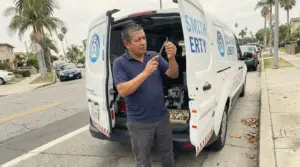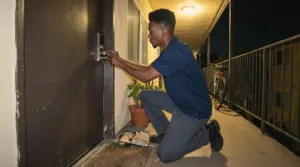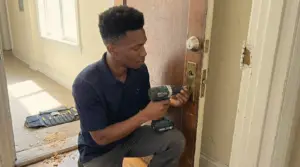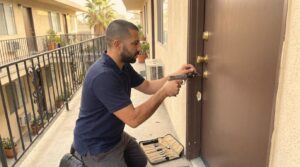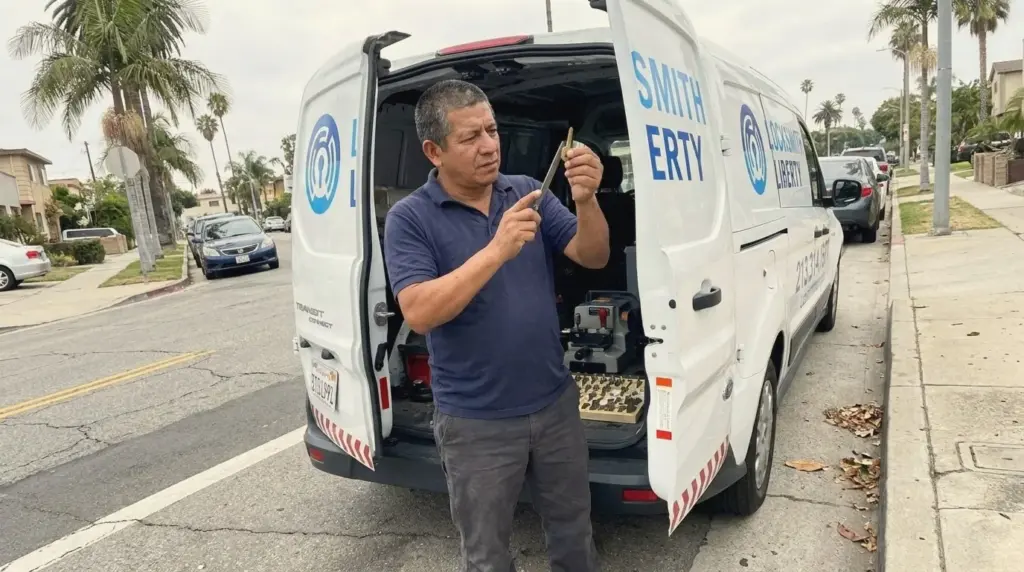
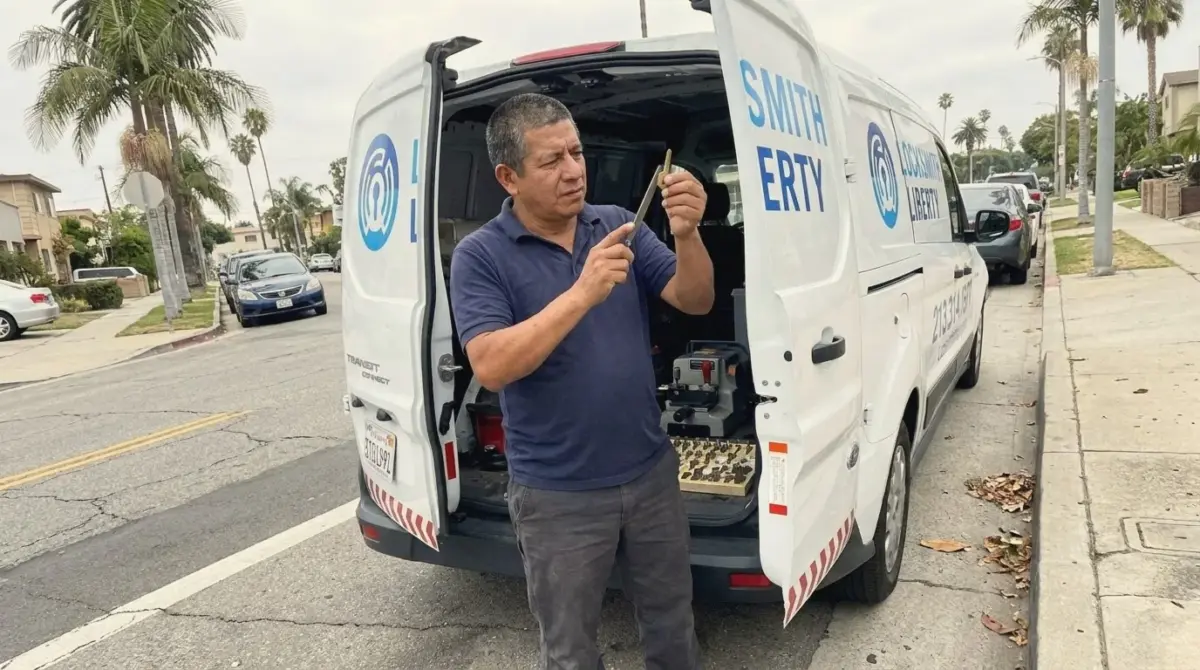
Yes, a locksmith can make a key without the original. A licensed locksmith in Los Angeles cuts a new key from the lock itself in one of three ways: by the code stamped on the lock or printed in the owner paperwork, by impressioning a blank inside the keyway, or by decoding the cylinder after taking it out of the door. When every key to a house or apartment is lost, rekeying the lock and cutting fresh keys is usually the smarter move, because it also cancels whichever key went missing. This guide from Locksmith Liberty covers house, office, mailbox, padlock and cabinet keys; car keys are a different job and get one short section further down.
Three ways a locksmith makes a key with no original, plus two situations that change the answer
1. Cut by the key code on the lock or in the paperwork
The fastest way to get a key made without the original is a key code. Office furniture is the best case: HON, Steelcase and most other file cabinet, desk and pedestal locks carry a code such as “126E” stamped on the face of the lock, and a locksmith converts that code into cut depths with a code book or key software and cuts the key on a code machine, no original needed. Padlocks are the opposite case: Master Lock prints the key number on the original keys and the packaging, not on the lock body, so if the keys are gone the number usually is too. Standard house locks from Kwikset, Schlage and similar brands have no visible code at all, which is why the methods below exist. Before you call, check the lock face, the lock packaging, the furniture invoice or the building’s key register for a code; a Locksmith Liberty technician can also tell you by phone whether a code is likely to exist for your lock type.
2. Impressioning
Impressioning makes a key with no original and without taking the lock apart. The locksmith inserts a blank of the right keyway, applies turning pressure so the pins bind, and rocks the blank so each binding pin leaves a tiny mark on the brass. The marked spots are filed down a little, the blank goes back in, and the cycle repeats until every pin sits at the shear line and the lock turns. It works on pin tumbler and wafer locks, which covers most house knobs, deadbolts, padlocks, cabinet locks and older mortise cylinders in Los Angeles. It does not work on high security and restricted cylinders with sidebars or rotating pins, and it is a hand skill that takes practice, so the lock stays in the door while a trained technician does it.
3. Decoding and disassembly
Decoding is the method a locksmith uses when the lock can come apart. The technician removes the cylinder (a knob or lever comes off the door, a mortise cylinder unscrews once the set screw in the door edge is backed out, a rim cylinder comes off from inside), reads the pin heights with a decoder or pin gauge, and cuts the key to those depths on a code machine. When the door is locked and no key exists, the technician opens it without damage first and then removes the cylinder. Decoding usually gives a cleaner cut than impressioning, and the same cylinder can be rekeyed on the spot if you would rather not trust the old combination.
4. Instead of a new key: rekey the lock and cut new keys
If all the keys to a house or apartment are lost, rekeying is the smarter move for a Los Angeles homeowner or tenant. The locksmith swaps the pins inside the existing cylinder for a new combination and cuts as many new keys as you want, so every lost or stolen key stops working the moment the job is done. Rekeying keeps the hardware you already have and can key the front door, back door and garage entry alike. It is the standard answer when the keys disappeared with a bag that also held your address, after a move, or after a roommate or contractor leaves. For tenants, California Civil Code 1941.3 already requires the landlord to rekey or replace the locks between tenancies, so ask the manager before paying for it yourself. Locksmith Liberty handles this as part of its residential locksmith service across central and west Los Angeles.
5. Special case: restricted keyways need the system’s dealer and proof of authority
A restricted keyway (Medeco, Mul-T-Lock and similar patented systems) cannot be copied at a hardware store, and that is the point of it. Restricted key blanks are sold only through the manufacturer’s authorized dealers, so no other shop can legitimately stock them, and new keys are issued against an authorization card, or against the signature card the installing locksmith kept on file when the system went in. If you lost the only key to a restricted lock, the path is the dealer who installed it, with your ID and the authorization card or your signature on record. Where the lock belongs to a building system, the property manager, not the tenant, is the person on file.
What about car keys?
Car keys are a separate process: the blade is cut by the vehicle’s key code and the transponder or smart key then has to be programmed to the car. Locksmith Liberty covers the whole job in how to program a car key without the original key, and the car key replacement page explains what the mobile technician brings.
Which method fits which lock
| Lock | Is there a code? | How the key is made with no original |
|---|---|---|
| House deadbolt or knob (Kwikset, Schlage, Weiser) | No visible code | Decode the cylinder or impression; rekey if the keys were lost rather than worn out |
| Office file cabinet, desk, pedestal (HON, Steelcase) | Yes, stamped on the lock face | Cut by code, or order from the manufacturer with the code |
| Padlock (Master Lock and most brands) | Only on the original key and packaging | Impression the lock, or replace the padlock |
| Apartment mailbox in a private mailbox bank | Usually on the key only | Replace the cam lock with the manager’s authorization |
| USPS-owned cluster box unit | USPS record | USPS installs a new compartment lock; locksmiths do not touch it |
| Prewar mortise lockset (Koreatown, Mid-City) | No | Pull the cylinder, decode and cut, or fit a new cylinder in the same lock body |
| Restricted keyway (Medeco, Mul-T-Lock) | Dealer record | Through the authorized dealer with ID and the authorization card |
Proof of ownership: what a licensed locksmith in California will ask for
In California a locksmith business must be licensed by the Bureau of Security and Investigative Services (BSIS), and every locksmith employee must be registered with the Bureau after a criminal history check through the California Department of Justice and the FBI. BSIS defines a locksmith as a business that installs, repairs, opens or modifies locks or that originates keys for locks, and it notes that a shop which only duplicates existing keys is not a locksmith under the law. That is the line this article is about: a key kiosk can copy a key you already have, but originating a key from the lock is licensed work. Registered locksmith employees must carry their Bureau registration card and a California driver’s license or ID while working (Business and Professions Code 6980.48), so ask to see both, and check the company at search.dca.ca.gov before any work starts.
The locksmith will ask you to prove you are allowed to have the key, and the proof depends on the lock. This is what Locksmith Liberty asks for in Los Angeles:
- House or condo: a photo ID with the property address, or an ID plus a lease, mortgage statement, utility bill or piece of mail at that address.
- Tenant whose ID shows an old address: the lease, or a call to the manager.
- Office, business or storefront: an ID plus the lease, a letter on letterhead, or the owner on the phone.
- Apartment mailbox: the lease and the manager’s permission, because the mailbox bank belongs to the building.
- Padlock, cabinet, safe or toolbox: an ID and the receipt, or the fact that the item sits inside your home or unit.
If you cannot produce any of this, a reputable Los Angeles locksmith will decline or ask for the owner to be present. Asking for proof is standard practice, and it protects you as much as the next person: the same check is what stops someone else getting a key to your door.
What happens on the visit
- The technician shows the BSIS registration card and checks your ID and proof of authority.
- The lock is identified: brand, keyway, whether it is part of a master system, and whether a code exists anywhere.
- The method is chosen: cut by code, impression, decode, or rekey, and the price is quoted before any work starts.
- The key is cut or the cylinder rekeyed, on site from the service vehicle.
- Every new key is tested in every lock it should open, and the old keys are confirmed dead if the lock was rekeyed.
Los Angeles specifics: apartment master keyways, mailboxes and prewar mortise locks
Apartment buildings with building master keyways. In many Mid-Wilshire, Koreatown and Hollywood apartment buildings the unit cylinders are part of a master key system, so one management key opens every door for emergencies while your key opens only yours. A tenant in Los Angeles cannot have that keyway swapped for a different brand, and a locksmith who decodes the cylinder will keep the master pins in place so management access survives. Replacement unit keys often go through the manager’s own locksmith, who holds the key records; if you are locked out meanwhile, the apartment lockout guide explains what a locksmith can and cannot do on a rented door.
Mailbox keys and USPS rules. Nearly every apartment mailbox bank in Los Angeles is privately owned, which means USPS will not make or replace the key; the building owner is responsible for the box, and a locksmith replaces the small cam lock rather than originating a key for it. Only a USPS-owned cluster box unit is handled by the Post Office, which installs a new compartment lock when all keys are lost. Locksmith Liberty’s mailbox lock replacement guide covers Postal Operations Manual section 632, who pays, and how the swap is done.
Older Mid-City and Koreatown mortise locks. Much of Wilshire Center and Koreatown was built in the 1920s, from the 1924 Gaylord and the 1926 Hotel Normandie to the 1927 Windsor Apartments, and the same decade’s duplexes and courtyard buildings fill Mid-City. Many of those doors still carry mortise locksets with a threaded cylinder held by a set screw in the door edge. A common surprise on these doors is a set screw buried under decades of paint, so freeing it without chewing the slot is the first job. The locksmith then unscrews the cylinder, decodes it and cuts a key; if the keyway is an obsolete Corbin, Sargent or Yale pattern with no blank in stock, a modern mortise cylinder threads into the same lock body and the original hardware stays on the door. Interior bit-key (skeleton key) doors from the same era are fitted by hand from a blank; they are privacy locks, not security, and should never be the only lock on an entry door.
When to call a pro
Order the key yourself when you hold the code: an office cabinet with a code on the lock face, or a padlock whose key number you saved. Call a licensed locksmith when the lock is on a door you live or work behind, when every key to the property is gone, when the keyway is restricted or high security, when the lock is prewar and may not survive a rough attempt, or when the keys were lost with anything that shows your address. For a home in that situation, rekeying through the residential locksmith service is the safer answer than a copy of a key someone else may now hold, and when you are standing outside right now the emergency locksmith line reaches a mobile technician any time of day. Every job is quoted upfront before work starts.
Key made without the original: FAQs
Can a locksmith make a key without the original?
Yes. A licensed locksmith makes a key from the lock itself, either by cutting to the code stamped on the lock or recorded in the owner paperwork, by impressioning a blank in the keyway, or by removing and decoding the cylinder. Restricted keyways such as Medeco or Mul-T-Lock are the exception and are reissued only through the authorized dealer.
What proof of ownership do I need for a house key in California?
A photo ID showing the property address, or an ID plus a lease, mortgage statement, utility bill or mail at that address. Tenants whose ID shows an old address use the lease or a call to the manager. California locksmith employees are registered with BSIS and must carry a registration card and California ID while working, so you can ask to see those in return.
I lost all the keys to my house. Should I get a key made or rekey the locks?
Rekey. A new key cut from the lock also works for whoever has the lost keys; rekeying changes the pin combination so the lost keys stop working and you get fresh keys in the same visit, with the existing hardware kept. Locksmith Liberty rekeys house and apartment locks across Los Angeles in one visit. Make a single key only when the old keys were destroyed or worn out rather than lost.
Can a locksmith make a key for my apartment if the building uses a master key system?
Generally yes, with the lease and the manager’s permission, and the technician typically keeps the master pins so management access still works. Many Los Angeles buildings route unit keys through their own locksmith who holds the key records, so ask the manager first; the keyway itself is normally the building’s decision, not the tenant’s.
Sources: BSIS Locksmith Company and Locksmith Employee Fact Sheet, Master Lock, replacement keys and key numbers, HON file cabinet lock codes, Medeco key control programs (product catalog), Los Angeles Conservancy, Koreatown tour guide, USPS Postal Operations Manual section 632, California Civil Code 1941.3.
About Locksmith Liberty
Locksmith Liberty is a mobile locksmith company based in Mid-Wilshire, Los Angeles, CA 90036, serving central and west Los Angeles including Mid-Wilshire, Koreatown, Hollywood, Beverly Grove, Miracle Mile, West Hollywood, Culver City and Santa Monica. Technicians respond 24 hours a day, 7 days a week for home, apartment and car lockouts, rekeying, lock installation and repair, car key replacement and programming, and commercial locks and access control. Every job is priced upfront before work begins. Call Locksmith Liberty any time at (213) 314-1971.