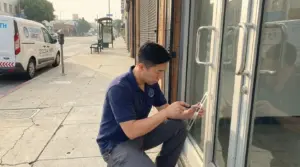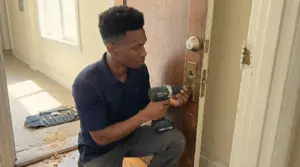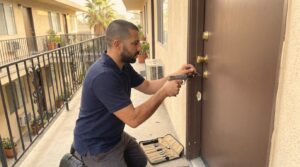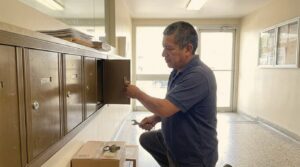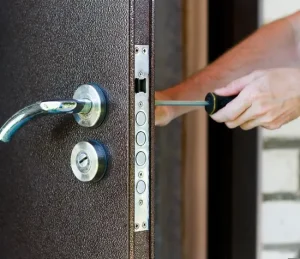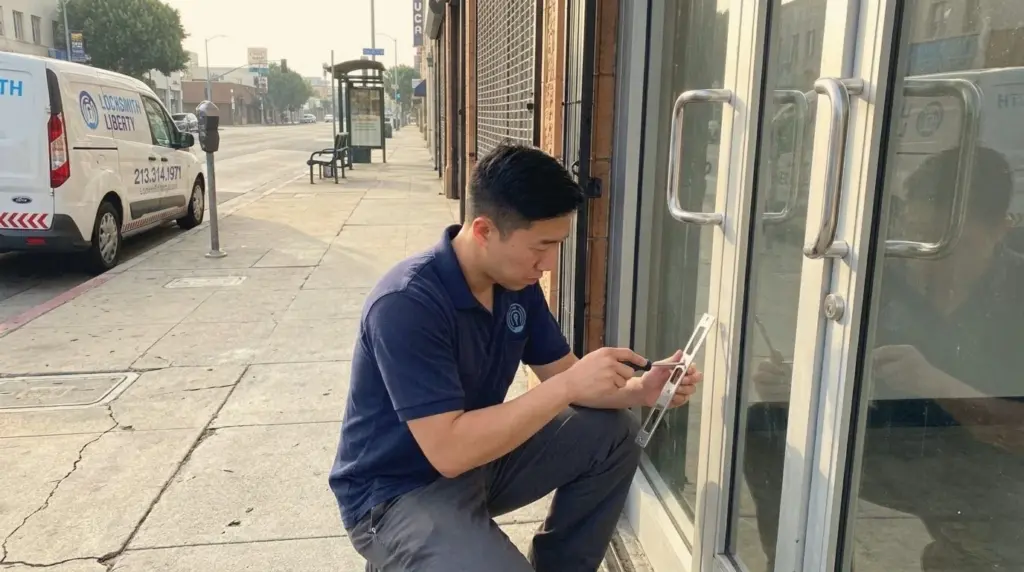
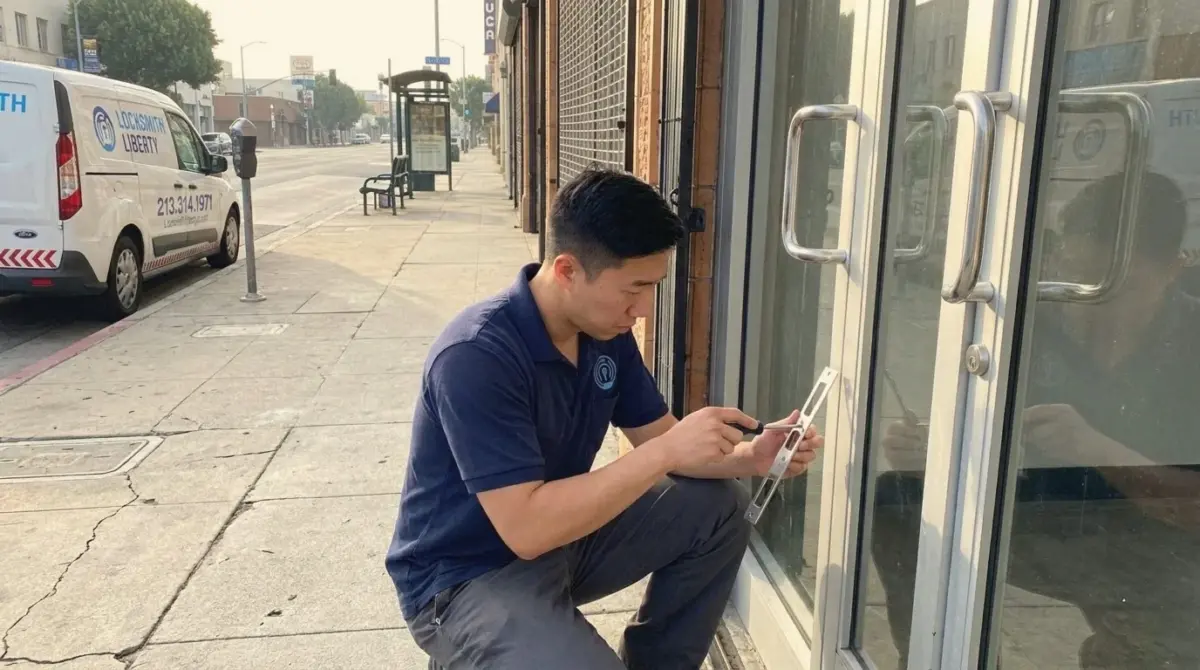
The right storefront lock upgrade on Wilshire Boulevard or Beverly Boulevard starts at the door, not at the brand catalog. For the aluminum-and-glass doors that front most Los Angeles storefronts, that means a narrow-stile deadlock with a full 1-3/8 inch bolt, a free-turning cylinder guard, a latch guard on the outswinging alley door, and only then a restricted keyway so the keys you hand out cannot be copied. The Los Angeles Police Department’s Crime Prevention pages set the baseline: a one-inch deadbolt with a hardened steel insert and a tapered cylinder guard on every exterior swinging door, deadbolts on inside security doors, steel padlocks kept locked, and a key log with locks changed when an employee leaves. This guide from Locksmith Liberty turns those recommendations into a commercial lock upgrade plan for a Mid-Wilshire, Koreatown or Beverly Grove storefront, including which high security locks for a Los Angeles storefront are worth the money.
What LAPD Crime Prevention actually recommends
LAPD’s Burglary Prevention page is specific about doors: “Exterior swinging doors should have a one-inch dead bolt with hardened steel insert and a free turning steel or brass tapered-cylinder guard. Double cylinder locks are recommended where glass is located within 40 inches of the locking mechanism.” The Small Business Crime Prevention page adds: “Make sure all outside entrances and inside security doors have deadbolt locks. If you use padlocks, they should be made of steel and kept locked at all times.” Both pages push key control: log every key issued, mark keys “do not duplicate,” remove the serial numbers from locks so a key cannot be made from the number, and change the locks when an employee leaves.
One caution Locksmith Liberty adds on every Wilshire or Beverly storefront: the double-cylinder deadbolt is a code question before it is a hardware question. California’s building code requires egress doors to open from inside without a key; the exception for a business occupancy’s main exterior door allows an inside key-locked deadbolt only when the lock is readily distinguishable as locked and a sign on the egress side says the door must remain unlocked while the space is occupied. So the double cylinder is an after-hours lock, and the daytime answer to glass near the lock is a cylinder guard, a Grade 1 deadlock whose bolt cannot be pushed back, and laminated glass or film.
The narrow-stile door: why a residential deadbolt does not fit
Most storefront doors between Western Avenue and Fairfax are narrow-stile aluminum frames around tempered glass. The stile is too narrow for a standard bored deadbolt, so the industry hardware is a mortise deadlock made for that stile, the pattern Adams Rite calls the MS deadlock. The standard MS1850S bolt is 5/8 by 1-3/8 by 2-7/8 inches with a 1-3/8 inch throw, well past LAPD’s one-inch minimum. The hookbolt version has a 13/16 inch throw but a hook shape that, in the manufacturer’s words, repels pry bar attempts to spread the door from its jamb or lift it off its track, which is why it goes on sliding and pivoting doors.
| Storefront door type | Lock body | Bolt | Add |
|---|---|---|---|
| Single narrow-stile aluminum swing door (Wilshire, Beverly, Western retail) | MS deadlock, Grade 1 | Straight pivot bolt, 1-3/8 inch throw | Free-turning tapered cylinder guard; strike reinforcement in the aluminum jamb |
| Aluminum sliding or pivot door | MS hookbolt deadlock | Hook, 13/16 inch throw | Anti-lift block in the top track |
| Hollow steel alley or service door, outswinging | Grade 1 deadbolt with the lever or exit device the code requires | One inch minimum, hardened insert | 12-gauge latch guard, hinge-side security studs, door closer |
What the ANSI/BHMA grade on the box means
Builders Hardware Manufacturers Association grades run from 1 to 3, with Grade 1 the highest, and a graded product has to meet every test in its standard at that grade, not just one. For the auxiliary locks on storefront and back doors the standard is ANSI/BHMA A156.36: a Grade 1 deadlock passes 250,000 cycles of opening and closing and withstands a 1,350 pound-force load on the door against the bolt, along with separate security tests for the cylinder and strike. Cylinders fall under A156.5, where Medeco’s M4 is rated Grade 1.
Latch guards on the alley door
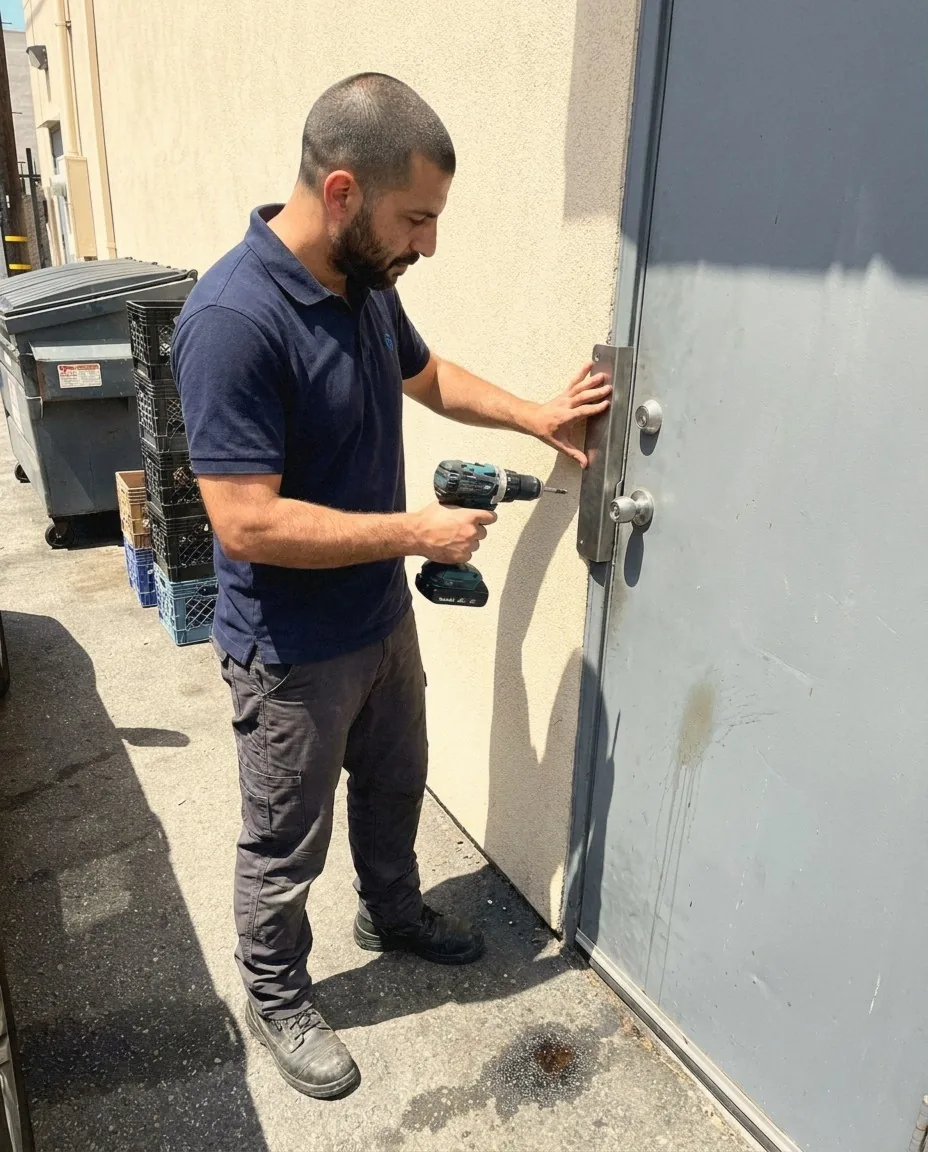
Burglars on the Beverly and Wilshire corridors work the back door, where the alley gives cover and the gap between an outswinging steel door and its frame gives a pry bar a place to bite. A latch guard, also sold as a latch protector, is a 12-gauge steel plate, in the common Don-Jo LP-207 size 2-3/4 by 7 inches, bolted through the door over the latch edge so the bolt and strike are covered from outside; the outswing version carries a welded steel pin that sits in the frame and keeps the door from being spread away from the jamb. A plate only protects a bolt that is actually thrown, so it is always paired with a Grade 1 deadbolt.
High security locks for a Los Angeles storefront: Medeco, Mul-T-Lock and restricted keyways
A restricted keyway solves the problem LAPD’s key log is trying to manage: a storefront key that a former employee, a cleaning crew or a vendor had copied at a hardware store. Medeco 4 cylinders are UL 437 Listed for resistance to drilling, picking and other physical attack, rated Grade 1 under ANSI/BHMA A156.5, and use a key with a patented movable element that Medeco says deters 3D-printed copies; duplicating one requires a Medeco cutting machine and Medeco blanks held only by an authorized dealer, with patent protection on the key control listed to 2040. Mul-T-Lock’s current MTL800 platform combines a triple locking mechanism with patented keys, copied only through an authorized dealer against the owner’s key authorization card. Both makers supply cylinders for MS deadlocks, mortise bodies, panic hardware and padlocks, so a storefront, its alley door and its grille can share one restricted system with a manager key over staff keys. Our earlier high security lock comparison covers the brands side by side; this post stays on the door.
When a restricted keyway pays off
| Situation at the storefront | Recommendation |
|---|---|
| Owner holds every key, no staff keys out | Grade 1 deadlock and cylinder guard; standard keyway, rekey when a key is lost |
| Three or more keys out to staff, cleaners or vendors | Restricted keyway on the front and back doors; key log with signatures |
| Staff turnover more than once a year | Restricted keyway, master over staff, rekey the staff level at each departure |
| Several units in one building under one owner | Restricted master key system covering storefronts, mailroom and utility doors |
| Prior burglary with no forced entry | Assume a copied key; restricted keyway immediately, then audit who holds what |
The upgrade order Locksmith Liberty uses
- Door, frame and strike first. A loose aluminum door, a strike held by two short screws, or a half-inch gap on a steel door defeats any cylinder; outswinging hinges get security studs.
- Grade 1 deadlock with full throw. MS deadlock on the aluminum door, one-inch-plus deadbolt with hardened insert on the steel door, per LAPD’s spec.
- Cylinder guard on every exterior cylinder so a wrench cannot grip it.
- Latch guard on outswinging doors, 12-gauge with the welded pin, carriage-bolted.
- Restricted keyway when keys are shared, Medeco 4 or Mul-T-Lock MTL800 cylinders in the same bodies, one authorization card held by the owner.
- Gates, glass and lighting: steel padlocks on grilles kept locked, laminated glass or film near the lock, lights on the alley door. These follow the lock work, they do not replace it.
Wilshire and Beverly specifics
The Wilshire corridor through Koreatown and Mid-Wilshire keeps a run of 1920s and 1930s Art Deco buildings with terra cotta facades that survived because they stayed economically useful to new businesses, and their ground-floor storefronts often still carry original mortise lock bodies behind replaced cylinders; Locksmith Liberty rekeys or re-cylinders those bodies rather than cutting the door. Newer retail along Western, Olympic and Beverly is mostly narrow-stile aluminum with roll-down grilles. Where apartments sit above the shops, the units follow the tenant-deadbolt statute covered in our landlord deadbolt and rekey guide.
Call Locksmith Liberty for a commercial lock upgrade
Locksmith Liberty’s commercial locksmith technicians upgrade storefront, alley and gate locks across central and west Los Angeles, quoted upfront by door and hardware before a technician is dispatched. For a break-in that needs the door secured tonight, the emergency locksmith team responds 24 hours a day. The wider checklist beyond the door is in our business security tips for Los Angeles entrepreneurs.
Storefront lock FAQ for Los Angeles businesses
What deadbolt does LAPD recommend for a store door?
LAPD’s Burglary Prevention page recommends a one-inch deadbolt with a hardened steel insert and a free-turning steel or brass tapered cylinder guard on exterior swinging doors, and deadbolts on all outside entrances and inside security doors. On an aluminum storefront door that is delivered by an MS-style narrow-stile deadlock with a 1-3/8 inch bolt.
Can I put a double-cylinder deadbolt on my shop’s front door?
Only as an after-hours lock. California’s building code requires egress doors to open from inside without a key while the space is occupied; the business-occupancy exception allows a key-locked main door only with a lock that shows when it is locked and a posted sign that the door must stay unlocked while the space is occupied. Ask the locksmith and, for a new tenant improvement, the building inspector.
What is a latch guard and do I need one?
A latch guard is a 12-gauge steel plate bolted over the latch edge of an outswinging door so the bolt and strike cannot be reached with a pry bar; the outswing version carries a welded pin that stops the door being spread from the frame. Any alley or service door that opens outward should have one.
Is a Grade 1 lock really different from Grade 2 or 3?
Yes. ANSI/BHMA grades run from 1 to 3 with Grade 1 the highest, and a Grade 1 deadlock under A156.36 passes 250,000 cycles and a 1,350 pound-force test on the door against the bolt. A retail door that is used all day needs the Grade 1 cycle rating.
Can a Medeco or Mul-T-Lock key be copied at a hardware store?
Not by a hardware store. Both use patented keyways and blanks sold only to authorized dealers, and keys are cut on a dealer’s machine against the owner’s authorization card or record, so new keys go through the dealer with the owner’s sign-off.
Sources: LAPD Burglary Prevention, LA County Public Works, building security and egress door requirements (CBC), LAPD Small Business Crime Prevention, BHMA, ANSI/BHMA A156.36 Auxiliary Locks, Medeco 4, Mul-T-Lock MTL800.
About Locksmith Liberty
Locksmith Liberty is a mobile locksmith company based in Mid-Wilshire, Los Angeles, CA 90036, serving central and west Los Angeles including Mid-Wilshire, Koreatown, Hollywood, Beverly Grove, Miracle Mile, West Hollywood, Culver City and Santa Monica. Technicians respond 24 hours a day, 7 days a week for home, apartment and car lockouts, rekeying, lock installation and repair, car key replacement and programming, and commercial locks and access control. Every job is priced upfront before work begins. Call Locksmith Liberty any time at (213) 314-1971.